Write in front
Faceteam is 58's brand persona system. By defining the persona images of 58 business lines with unified style and applying them to daily visual design, strengthen 58 brand awareness and improve visual unity, and establish contact with users while transmitting company information.
Previously, 58 has released the faceteam illustration character system, which has been widely used in the daily design of 58 business lines.

This year we set the goal of building a faceteam 3D persona system. We hope to create a 58 distinctive 3D persona system. By integrating 3D characters into components, the threshold for using 3D character materials is reduced, so that 58uxd designers can easily use 3D characters for visual creativity, so as to improve visual quality and work efficiency.

Why do you want to build a 3D character component library?
1. Trends
With the popularity of 3D style and its wide application in visual design, 3D elements have become indispensable elements in daily visual design.
2. Unification
58 city is a massive classified information service platform, including multiple business lines such as real estate, recruitment, second-hand car, group purchase and yellow pages. A 3D persona system with 58 characteristics is created and applied to all business lines as a standard for platform consistency to ensure the relevance and stability of visual output.
3. Efficiency
Reduce the repetitive work in the visual process, adopt an efficient component-based method, and improve the efficiency and productivity of design.
How to build a 3D persona system in line with 58 business system
As a 3D persona system of 58, it needs to meet various needs. First, it needs to be compatible and can be applied to any business line of 58 without a sense of conflict. Second, it needs to be scalable to meet the needs of a huge business system. It is not easy to build an enterprise level human and material component library, We get the final result through continuous exploration and attempt. Looking back, the whole process has gone through the following stages. Summarize the experience and detours in the process and share them with you.

1. Team formation
A powerful 3D system needs the support of a powerful 3D team, but not every designer can master the new application and operation design method of 3D software. Fortunately, the team partners have strong learning ability and self drive. They master various skills in continuous learning and successfully complete the requirements.
2. Basic role definition
How to define the basic character image style of 3D faceteam is a crucial link. We need to refine the character style and take into account the needs of large multi business lines. Therefore, the basic character image needs universality and expansibility. During this period, we have experienced a long exploration process.
We established the emotional version and did a lot of style analysis to ensure the difference and recognizability of character styles.

At the same time, we also made many style attempts. At first, we wanted the characters to be real and close to life. Therefore, the proportion of character setting was closer to real people. At the same time, we chose to use MD software to make clothes to restore the real texture of clothes. Results based on the character setting and clothing, the output style of this set of characters lacked aesthetic feeling and youthful feeling, and was decisively passed

After that, we tried the cartoon style image design to make the image more concise and general, but the overall output lacks characteristics and memory points.


In constant attempts and modifications, we finally found the key words that belong to faceteam style. Finally, we thought about style refining from the perspective of image itself and practical application, and got the right direction.

In the following design process, we continued the 2D faceteam gene. We hope that 3D faceteam is still a mellow and friendly style that is easy to be accepted by the public. Therefore, we retained its facial features, round shoulders, head body ratio and other characteristics. At the same time, combined with the characteristics of 3D model, we adjusted the body proportion for the new 3D image to make it more characteristic and memory points, It is different from other competitive products.

58. The user groups of various business scenarios are gradually becoming younger, and 3D faceteam tends to be younger in style positioning, which is convenient for the visual performance in the process of daily operation. Through the design of clothing accessories, we present the youth and fashion flu of characters, integrate the above demands, and design a new basic image of faceteam 3D men and women respectively, Determine the style basis for faceteam 3D character library.
3. Business line role expansion
After summing up the experience of basic role design, we adjusted the design process of expanding role design, returning to making character setting in 2D form with relatively low cost, and then transforming it into 3D model, so as to reduce the time cost of scheme modification.
The ultimate goal of faceteam 3D is to cover the daily application needs of personas of 58 various business lines. Therefore, after establishing the basic image, it is necessary to expand a persona library to ensure that designers of each business line can find their own personas in the library.
We communicated 58 the designers of various business lines, collected the most frequently used role identity demands in their daily design, prioritized the collected personas, merged duplicate roles, and deleted more accurate roles that can represent each business line. Finally, the list including female HR, female white-collar workers, male general workers, young women, young men, middle-aged women, landlady and middle-aged men was determined.
In order to unify the style of characters, we have made a unified treatment for the human body of each character. Therefore, we need to define the character and professional attributes through clothing accessories design and small elements representing identity attributes. Ensure the accurate positioning of each role and make it a vivid and flesh and blood existence.
With the starting point of youth and trend, we collected information and brain storm on clothing accessories, studied character clothing, and designed clothing matching that meets the positioning of each role.

Each member of the team claimed his own role, gradually achieved unity of style through repeated modification and running in, and then integrated into a set of 2D role settings with consistent style.


Collaborative output 3D character model
Combined with the setting of 2D image, based on the 3D basic role model, carry out the 3D model role design of the expanded role. The construction of the basic role model naturally forms a set of 3D design specifications. The human body model is consistent, ensuring the consistent body proportion of each role. A unified bone binding system ensures the consistency of later action output. Handle the details of clothing to ensure the consistency of clothing style.
In terms of rendering output, we have also tried a variety of rendering styles, and handed over the PNG of characters output by each style to the designers of each business line for practical verification in daily design. The final conclusion is that the ambient light and material are relatively soft, the rendering effect is more universal, and can be well adapted to more application scenarios in UI and operation design, Therefore, we choose the rendering of soft light environment as the final rendering output style.

Finally, despite the cooperation of multiple designers, a 3D task character library with unified style and obvious sense of set is output.
After the completion of all 3D roles, we began to think about how to deliver these formed 3D resources to business line designers to maximize the value of resources. Therefore, we have done work in two directions.
1. Character action picture library output
We design a set of actions that meet the identity positioning and are used frequently for each character, render and output them into PNG, form a picture library, and upload them to 58 designer material sharing platforms such as wind fire wheel and crystal ball, so as to facilitate designers to access them at any time and apply them directly to visual design, which not only helps students with weak 3D foundation overcome the obstacles of using 3D software, It can also quickly obtain the completion requirements of resources.

With the joint efforts of faceteam members, the design of persona library including 10 characters, 14 sets of clothes and 112 actions has been completed, covering 90% of the daily operation needs of each business line of uXD.

2. Character 3D component preset Library
For those students who have 3D foundation, we hope to directly provide models to these designers, so that they can more flexibly extend the design of visual images. However, the tedious and scattered model download increases the time and learning cost for designers, so we think of the way of character component preset library.
By integrating all persona models into a unified model preset library, designers of all business lines can obtain all personas and action presets with one click of installation, promote and apply them in a more accessible way, reduce the cost of designer learning and downloading, and use the persona library more efficiently.

Basic function: the preset Library of the character component contains 10 basic roles that are set, and 8 specific actions are taken for each role. After the designer chooses the roles and actions needed, he adjusts the camera angle to render the desired role status.

Extended function: the character component library contains components such as character clothing, hair style, action, environment and accessories. The components can be freely combined and flexibly matched. On the basis of the original 10 role models, 60 new role models can be expanded, which greatly increases the number of characters and the flexibility and variability of design, It meets the needs of designers for a larger role system.
Development and application of character component library
After the completion of the character component library, through simple training, most designers have downloaded and installed preset files and mastered the use methods. Faceteam task role system is also promoted and used in all business lines of uXD. On the basis of observing brand unity, designers flexibly use the character elements of the component library to derive works with more innovative personality and multi-dimensional visual characteristics, The following are the application outputs of designers of each business line.

house property

recruit

chariots and robes

platform
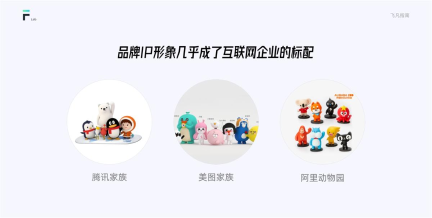
58 originally, there were many business lines, and each business line had its own visual latitude, so it was difficult to form a unified brand cognition. The application of faceteam 3D personas became the link of visual output and printed 58 unique labels for each poster to ensure brand unity. Unique character modeling enhances brand awareness, improves brand perception and facilitates brand communication.
The one click installed character component library is convenient and real to help quickly deal with daily needs and improve design efficiency. Faceteam 3D character component library has completed our expected functions at the beginning of design.
Future plans
In the future, faceteam 3D component library will refine persona models, increase the number of characters, enrich component types, expand model assets, and expand expression components to make their emotional expression more accurate. Please look forward to making better materials for everyone to use.
Welcome to WeChat official account of "58UXD":